When two companies merge with stock, nobody hands you cash. You trade one set of shares for another and hope the swap was fair.
That trade happens whether you pay attention or not. If you own a broad index fund, it can happen inside your 401(k) without a single click from you.
Tesla (TSLA) is big enough that plenty of people hold it that way. The automaker reported $28.05 billion in third-quarter revenue and delivered 486,532 vehicles.
SpaceX (SPCX) is worth about $1.83 trillion, and Tesla about $1.58 trillion. Elon Musk runs both, and he sees “a lot of merit” in combining them, he said on SpaceX’s Oct. 20 earnings call.
However, a subtle shift has emerged in how Wall Street talks about a deal. The question is no longer whether it makes sense. It’s what Tesla shareholders would actually get.
According to a Bank of America research report seen by TheStreet, Tesla holders should expect a premium if SpaceX buys the company, but a tough shareholder vote and China stand in the way.
What a Tesla-SpaceX swap would look like by the numbers
Terms haven’t been agreed upon, and a deal is far from certain. Musk himself called the Tesla vote “quite a high hurdle.”
Analyst Alexander Perry laid out the math in an Oct. 29 note titled “Thrusters included: Potential merger adds optionality on top of the autonomy ramp.”
“We think a logical structure could be an all-stock acquisition of Tesla by SpaceX, with Tesla shareholders receiving newly issued SpaceX shares,” wrote Perry.
Related: Elon Musk doubles down on the Roadster with SpaceX thrusters
At Oct. 20 closing values, a swap with no premium would leave Tesla holders with 42.4% of the combined company, Perry wrote. Musk would hold 36.3% of the economics and 55.6% of the vote.
Perry expects the Tesla board’s special committee to push for more. Here’s how his scenarios stack up:
- No premium: About $374 a Tesla share, with Tesla holders owning 42.4%
- 20% premium: About $449 a share, with Tesla holders owning 46.9%
- 25% premium: About $467 a share, with Tesla holders owning 47.9%
- 30% premium: About $486 a share, with Tesla holders owning 48.9%
Even at a 30% premium, Musk would keep 51.6% of the vote, the note showed.
Why the market already moved the math
Here’s the part I’d focus on. The stocks have moved since Oct. 20, and that changes the starting point.
More on Tesla and SpaceX:
- SpaceX shares soar on possible tie-up with Tesla
- Bank of America sends SpaceX stock investors strong signal
- Tesla stock sellers should pump their brakes, 5-star analyst says
Tesla closed at $399.81 on Oct. 30. SpaceX fell 6.4% that day to $134.72.
By my math, an at-market swap at those prices works out to about 2.97 SpaceX shares per Tesla share. That’s close to the 3.03 ratio in Perry’s 20% premium case.
Using the share counts in his note, Tesla holders would own about 46% of the combined company with no premium at all.
In other words, the market has already handed Tesla holders part of the premium Perry expects them to negotiate.
That cuts both ways. A committee asking for 25% on top of today’s price would be asking SpaceX for a lot more stock.
Given that backdrop, it’s easy to understand why Perry thinks the strategic case rests on shared costs rather than goodwill. The clearest example is Terafab, the companies’ joint chip project.
The companies “have yet to agree how to split Terafab’s costs, which Musk expects to exceed $100bn long term, and a merger would remove that negotiation,” wrote Perry.
The business ties already run deep. SpaceX bought $626 million of Tesla Megapacks through the third quarter, including $221 million in the third quarter alone, Perry wrote.
The vote and China could still stop it
Bank of America sees two big hurdles before any premium matters.
The first is the vote. Tesla’s charter requires approval from a majority of all outstanding shares, and abstentions and broker non-votes count against a deal, Perry wrote.
He pointed to 2025 as a warning. Tesla’s advisory proposal to invest in xAI drew 1.06 billion votes for and 916 million against, but it still failed on 473 million abstentions, the note showed.
By my math, abstentions made up about 19% of the votes cast on that proposal. A merger vote would face an even higher bar, because unvoted shares would also count as no votes.
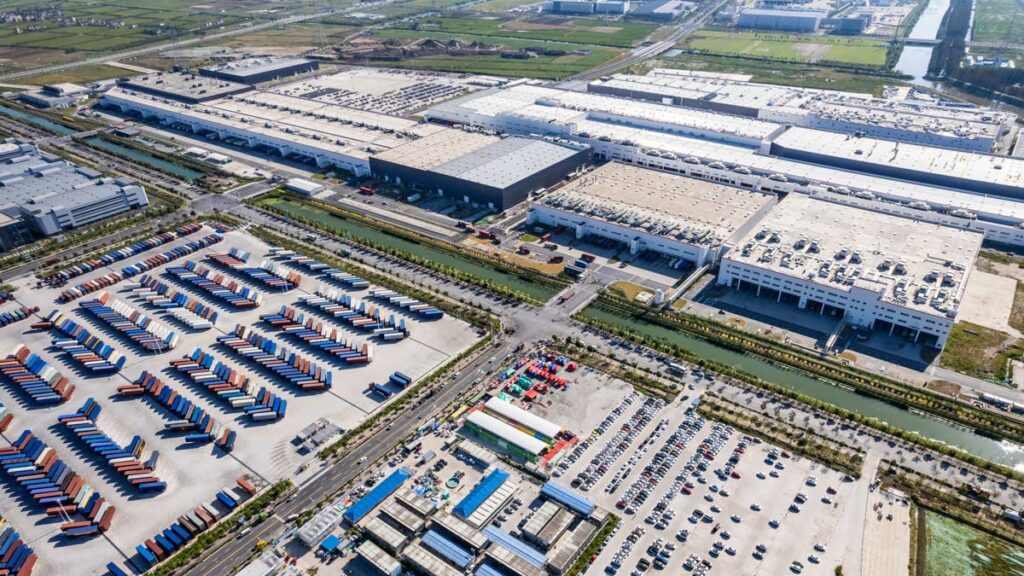
The second hurdle is China. “We view China as the main regulatory risk as a potential deal would place Tesla’s Shanghai plant, which builds roughly half of its global vehicle output, under a major U.S. defense contractor,” wrote Perry.
He expects a firewall that keeps Tesla China’s data and staff apart from SpaceX’s defense work, the approach used by companies such as Airbus and Honeywell.
Much will likely depend, however, on timing. Bloomberg reported a push to announce a deal by the first half of 2027, Perry noted, though the companies haven’t confirmed it. Tesla’s Dec. 3 annual meeting doesn’t include a merger vote.
I’d also keep an eye on the money.
Perry forecasts negative free cash flow of $4.6 billion this year and $11.3 billion in 2027 as capital spending climbs to about $25 billion a year, the note showed. A cash-hungry Tesla gives SpaceX the upper hand at the bargaining table.
Perry kept his Buy rating and $460 price objective, about 15% above Tesla’s Oct. 30 close, by my math.
“We see a potential merger as additive optionality on top,” wrote Perry.
Related: Bank of America resets Tesla forecast as Robotaxi miles double